
The Science of Fibre: How Mr. Regular Works
Most Canadians fall well short on fibre. Health Canada recommends about 25 g a day for women and 38 g for men, yet the average adult gets only around 14 g — roughly half.[1] That shortfall shows up as sluggish digestion, irregularity, and a gut microbiome that simply isn't being fed.
Mr. Regular is built to close that gap in a way you'll actually keep up with: a 3-in-1 blend of organic psyllium husk, Orafti® inulin, and Solnul® resistant starch, in a smooth vanilla powder with no grit and no artificial sweeteners. Here's the science behind each ingredient — and what the research does, and doesn't, say.
How fibre actually works
"Fibre" isn't one thing. The fibres that matter for daily digestion do two distinct jobs:
- Bulking and softening. Soluble, gel-forming fibre like psyllium absorbs water and forms a soft gel that adds bulk and helps stool pass comfortably — supporting regularity without the urgency of stimulant laxatives.
- Feeding your microbiome. Prebiotic fibres like inulin and resistant starch aren't digested by you. They're fermented by the bacteria in your colon, which produce short-chain fatty acids such as butyrate that nourish the gut lining.
Most fibre supplements only do the first. Mr. Regular is formulated to do both. More on soluble vs. insoluble fibre →
The 3-in-1 blend
Organic psyllium husk — the daily mover
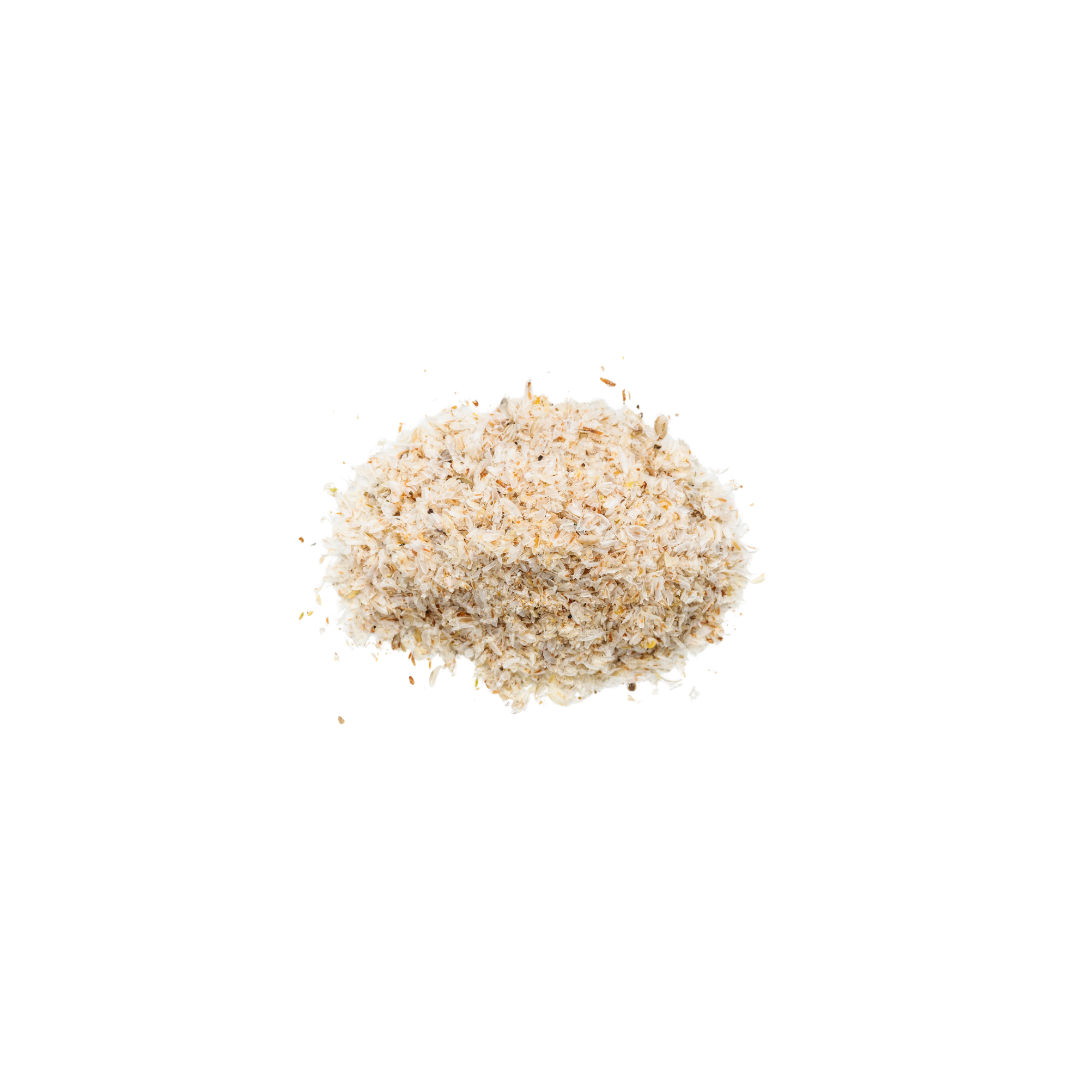
What it is: a premium organic soluble fibre from the husk of Plantago ovata seeds — the most clinically studied fibre for regularity.
What it does: absorbs water and forms a gentle gel that adds bulk and softens stool for smooth, predictable mornings, without urgency.
What the research says: the 2023 joint clinical guideline from the American Gastroenterological Association and the American College of Gastroenterology identifies psyllium as the fibre supplement with the best evidence for chronic constipation.[2] Soluble fibre from psyllium is also recognized by the U.S. FDA and Health Canada for helping lower blood cholesterol as part of a diet low in saturated fat — an effect demonstrated at intakes of roughly 7 g of soluble fibre per day, more than a single serving provides.[3]
How psyllium works, dosing, and timing →
Inulin (Orafti®) — the balancer

What it is: a high-grade prebiotic fibre derived from chicory root.
What it does: selectively feeds beneficial bacteria — especially Bifidobacterium — which ferment it into short-chain fatty acids like butyrate that support the gut lining and a balanced inflammatory response.
What the research says: systematic reviews of inulin-type fructans show consistent increases in Bifidobacterium and short-chain fatty acid production in human studies.[4]
Solnul® resistant starch (RS2) — the modern prebiotic

What it is: a clinical-grade resistant potato starch (type RS2), made in Canada from upcycled, non-GMO potatoes.
What it does: bypasses early digestion and reaches the lower intestine intact, where it fuels beneficial fermentation and supports microbiome balance.
What the research says: a randomized, double-blind, placebo-controlled trial found that just 3.5 g of Solnul® per day significantly increased beneficial gut bacteria (Bifidobacterium and Akkermansia) and reduced both constipation- and diarrhea-associated bowel movements over four weeks.[5]
What to expect
- Start low. Begin with a smaller dose for the first few days, then build up as your gut adjusts.
- Hydrate. Mix into a full glass of water and drink promptly — fibre needs fluid to work.
- Be consistent. Most people notice easier, more regular mornings within about 3–7 days of daily use. The microbiome rewards consistency over a single large dose.
Quality and sourcing
- Organic psyllium husk
- Clinically studied Orafti® inulin and Solnul® resistant starch
- No artificial sweeteners, colours, or added sugar
- Non-GMO and FODMAP Friendly inputs
- Made in Canada, shipped Canada-wide
Frequently asked questions
What's the difference between a prebiotic and a probiotic?
Probiotics add live bacteria. Prebiotics, like the fibres in Mr. Regular, feed the beneficial bacteria you already have. Read the full breakdown →
Will it cause bloating?
Some gas is normal as your gut adapts to more prebiotic fibre. Starting with a smaller dose and building up helps minimize it. Notably, Solnul® shows prebiotic effects at a low 3.5 g daily dose, which supports comfort.
Is psyllium a laxative?
Not in the stimulant sense. Psyllium is a bulk-forming fibre that works naturally by softening and adding bulk to stool, rather than chemically forcing the bowel.
More practical questions — dosing, storage, diet, and where to buy — are answered on our FAQ page.
The takeaway
Mr. Regular combines the fibre most recommended for regularity with two clinically studied prebiotics that feed your gut — in a daily powder that's actually pleasant to take. That's the difference between a supplement that just passes through and one that works with your body.
Shop Mr. Regular Original → | Shop Mr. Regular +Prebiotic →
References
- Canadian Digestive Health Foundation. Recommended Daily Fibre Intake. cdhf.ca
- American Gastroenterological Association – American College of Gastroenterology Clinical Practice Guideline: Pharmacological Management of Chronic Idiopathic Constipation. Gastroenterology, 2023. gastrojournal.org
- Health Canada. Summary of Health Canada's Assessment of a Health Claim about Food Products Containing Psyllium and Blood Cholesterol Lowering. canada.ca. See also Jovanovski et al., psyllium and LDL cholesterol meta-analysis, American Journal of Clinical Nutrition, 2022. ajcn.nutrition.org
- The Prebiotic Potential of Inulin-Type Fructans: A Systematic Review. Advances in Nutrition, 2022. advances.nutrition.org
- Consumption of Solnul™ Resistant Potato Starch Produces a Prebiotic Effect in a Randomized, Placebo-Controlled Clinical Trial. Nutrients, 2023; 15(7):1582. mdpi.com
This page is for general education and isn't medical advice. Mr. Regular is a food product, not a treatment for any disease. If your digestive symptoms are severe, persistent, or accompanied by other symptoms, please speak with your doctor or pharmacist.